Advanced Robotic Surgery, Close to Home. Meet the da Vinci 5.
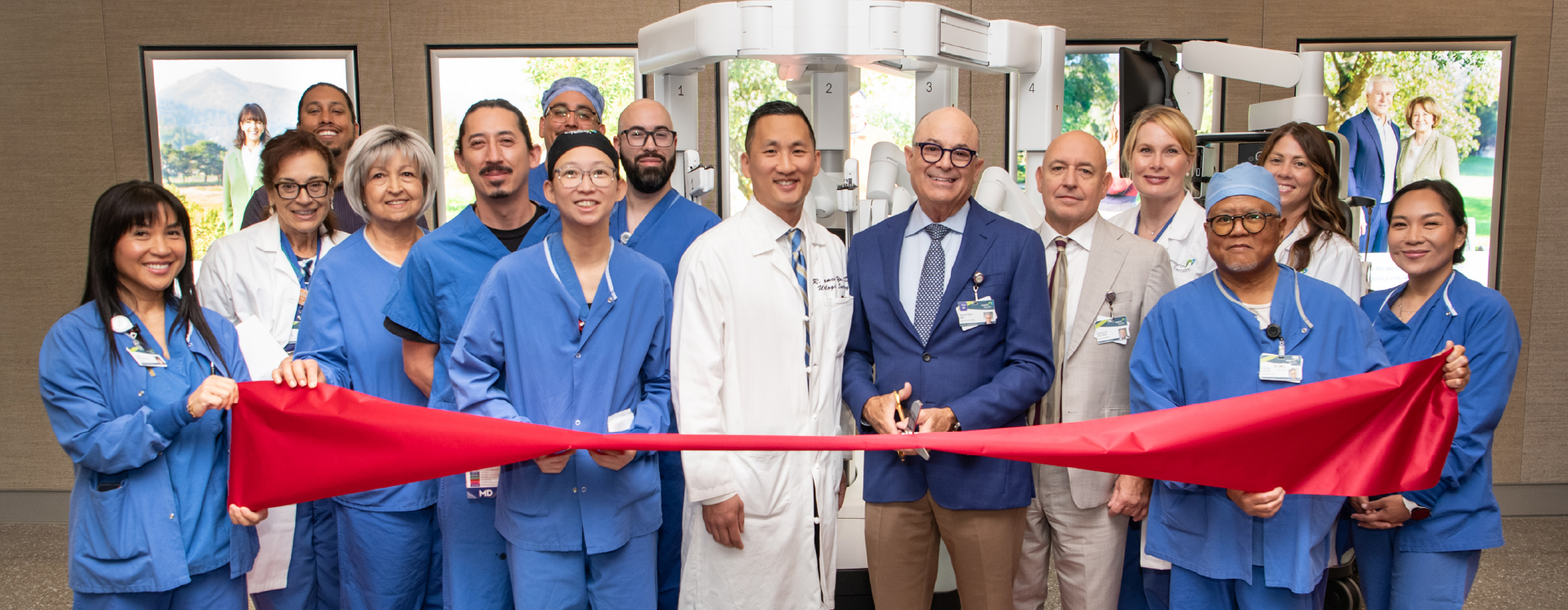
Robotic-assisted surgery helps surgeons perform certain complex procedures through small incisions, using highly precise instruments and magnified 3D imaging. At MarinHealth, surgeons use this technology in general surgery, gynecology, urogynecology, colorectal surgery, and urology. .
Robotic-assisted surgery has evolved over decades. Today, advanced systems give surgeons enhanced views and control while they remain responsible for every movement throughout the procedure.
During robotic-assisted surgery, the surgeon controls the instruments from a console in the operating room, guided by a magnified, three-dimensional view. The system translates the surgeon’s hand movements into precise movements of instruments inserted through small incisions. A surgical team remains at the patient’s bedside throughout the procedure.
The technology is designed to enhance visualization, precision and control during minimally invasive procedures. Surgeons describe robotic surgery as a game-changer for several reasons:
- Precision: The robotic wrists bend and rotate farther than a human wrist, reaching tight spaces with ease. The robot also filters out natural hand tremor and scales movements down, so a big motion at the console becomes a precise, tiny one inside the body.
- Visibility: The magnified 3D view makes delicate structures easier to see.
- Comfort: Operating from a seated, ergonomic console reduces physical strain, which can help surgeons stay sharp during complex cases.
At MarinHealth Medical Center, we’ve seen significant growth in robotic-assisted surgery in recent years, with surgical volume increasing nearly 70 percent since 2022. Based on volume through August, we expect to nearly double our 2022 levels by the end of 2026.
To meet that growing demand, we’ve recently added a da Vinci 5 surgical system, the newest generation of robotic-assisted surgical technology. The new system joins our existing da Vinci platform, expanding capacity for robotic-assisted procedures and providing our surgeons access to the latest advancements in minimally invasive surgical technology.
“Adding the da Vinci 5 gives our surgeons access to the newest generation of robotic technology while providing the additional capacity we need to meet growing demand,” said David G. Klein, MD, MBA, Chief Executive Officer of MarinHealth. “Most importantly, it allows more patients to access sophisticated surgical care close to home.”
The new da Vinci 5 is the most advanced da Vinci system yet, featuring more than 150 design innovations. Advancements include enhanced 3D visualization, improved surgeon ergonomics and workflow, greater computing capabilities, and force feedback with compatible instruments, which enables surgeons to sense the forces being applied to tissue during certain procedures.
“The da Vinci 5 represents an important advancement for our program and provides our surgical teams with additional capabilities as we continue to expand the use of minimally invasive approaches for appropriate patients,” said R. James Yu, MD, an experienced urologist and Medical Director of the Robotics Program at MarinHealth.
For appropriate patients and procedures, minimally invasive surgical approaches may offer advantages over traditional open surgery, including:
- Smaller incisions and less scarring
- Less pain, resulting in a reduced need for pain medication
- Lower risk of infection
- Less blood loss
- Shorter hospital stays
- Faster return to everyday activities
If you’re facing surgery, ask your doctor whether a robotic option makes sense for you. The appropriate surgical approach will depend on your health, diagnosis, and procedure, and will be determined in consultation with your surgeon.
MarinHealth’s addition of the da Vinci 5 was made possible through the generosity of donors to the MarinHealth Foundation, whose support continues to help bring advanced technology and exceptional care to our community.
Curious about robotic surgery? Talk with your provider or visit this page of our website to learn more.

